Speaking Engagements & Private Workshops - Get Dean Bubley to present or chair your event

Need an experienced, provocative & influential telecoms keynote speaker, moderator/chair or workshop facilitator?
To see recent presentations, and discuss Dean Bubley's appearance at a specific event, click here

Showing posts with label Telenor. Show all posts

Thursday, December 17, 2015

Communications apps, APIs & integrations: Import vs. Export models

There is a huge and growing interest in blending communications apps/services with other software capabilities. We are moving from a world of standalone voice, video and messaging to a range of contextualised, workstream-based and embedded alternatives.

But there are two very distinct philosophies emerging for app/comms integration:


  • Export: this involves extending communications capabilities out from a central system (phone system, UC, messaging app, videoconferencing etc) into other applications or websites via APIs, or by offering granular service-components (eg WebRTC gateway, transcoding, recording etc) via a PaaS approach. Numerous examples exist, from
    • Vendors (eg Unify's Circuit APIs, Genband Kandy, Xura Forge, Cisco Tropo, ALU's Rapport APIs, BroadSoft, Vidyo etc)
    • Dedicated PaaS providers (eg Twilio, SightCall, Temasys) or niche specialists such as Voxbone (which does numbering for example)  
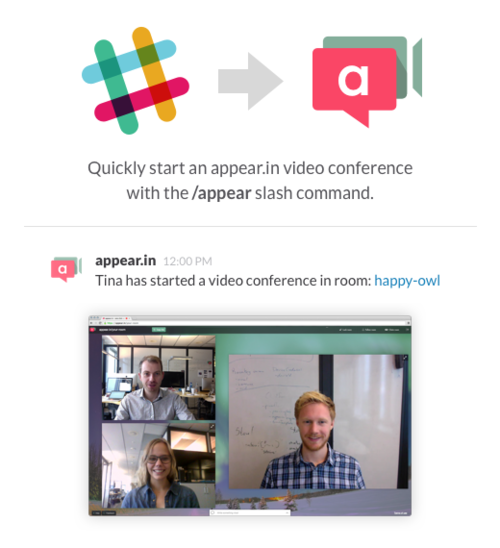
    • Telcos' API platforms, which may be network-integrated like AT&T's Developer Platform, standalone PaaS like Telefonica Toxbox, or even just web-embeddable objects like Telenor appear.in
  • Import: this involves treating the communications application or service as the user's primary experience, and bringing in other applications as "integrations" or mini-apps. These can be other communications tools (eg WebRTC video windows in a messaging app) or other functions (eg social or process-based integrations). This particularly fits with the "timeline" or "workstream" model, or perhaps a "dashboard". Examples exist in a number of areas:
    • Enterprise is moving towards "workstream collaboration and communications" (WCC) apps, such as Slack, Cisco Spark, Unify Circuit and various others which can embed external services into a timeline. BroadSoft's Tempo concept looks more like a dashboard model than a timeline, but also brings in sources like DropBox.
    • Consumers are moving towards "Messaging as a Platform" apps, notably in Asia with WeChat, which embeds mini-apps such as taxi-ordering into the message stream. Facebook is taking Messenger in the same direction, and even telcos want to replicate this - Deutsche Telekom is trying to reinvent RCS to take it in that direction, for example.
The API-led "export" model has been the primary trend in WebRTC, SMS and telcos' network/IMS strategies in recent years. We hear a lot about the "consumption" of APIs, "embedding" of communications or the "exposure" of a core system. It is definitely growing rapidly, in numerous guises. Click-to-call buttons embedded in websites or apps are a typical manifestation. (Video below is embedding AT&T capability into Plantronics' website)


But the success of apps such as Slack and WeChat have led to a resurgence of the idea of "unifying" communications, or using a "hub" approach, where a messaging/voice/video app becomes the central anchor of a user's "online life", either as a dedicated application or browser home-page.


Some vendors are trying both approaches - Unify and Cisco seem to be looking at both import and export models. It might be where Google is intending to take Jibe along with telcos and Android as well. Some UCaaS players seem to be taking a similar path (eg with ThinkingPhones acquisition of Fuze) as well as WCC specialists like Atlassian's HipChat.

Others are taking different angles - Microsoft seems to be using Office 365 as the anchor, importing its own Skype4Business UC application as well as maybe others in future, probably via ORTC. I suspect it will "export" more communications as well, in future. Apple (as usual) is different, still using iOS as its main platform for very selective import of a few comms/social tools such as Facebook and Twitter, and largely avoiding any export models at all. (There is no way to embed FaceTime or iMessage in a website, for example). Apple also tends to dislike apps acting as subsidiary platforms on mobile, especially if there are payments involved.

It is too early - and too polarised - to determine whether import or export will be most significant, and for which use-cases and customer segments. We may see different "balances of payments" for different vendors and service providers. However, there are a number of early conclusions to draw:

  • Import models need a good and usable / well-liked core product, before they can become a platform
  • Export models need the right "raw ingredients", eg simple video or SMS APIs, with the right (typically freemium) commercial model to attract developers
  • Import models tend to work best with a core that is text/timeline-based, ie non-realtime
  • There is a risk that some import models appear as "arrogant": I can imagine some users thinking "What, you expect me to spend the core of my day in your app?! You must be joking"
  • Export models face a lot of competition - external developers have many APIs to choose from, or can implement their own capabilities from scratch.
  • Import models involve competition between comms tools and other apps as the "anchor" - eg a UC tool, vs. social networks, or an Office/Google Apps suite as hub, or major enterprise products like SAP/Salesforce, or a vertical-specific platform like a medical practice-management app.
  • Import and export approaches often vary in implementation between Android, iOS, Windows and native chipset-level
  • Telcos have been trying export models for a long time, with limited success. Often, 3rd party platforms that act as aggregators / or "export agents". Cable / IPTV companies are closer to the import model as they own the set-top box interface to "on-board" other solutions
  • We might see NFV / VNF architectures helping with telco-grade import & export in future, but for communications services it's still a long way off
  • Mobile app usage tends to be fragmented. With the notable exception of WeChat, it's not clear that a full import model works well with the app paradigm on smartphones. That said, we may see greater cross-linkage between apps in future.
  • Certain groups of knowledge-workers may be more well-suited to "import" comms apps, especially if they are either communications-primary users (eg call centre agents) or heavily-collaborating teams.
  • Design skills are paramount throughout, for integrations to be usable. 
  • We will see some "importers" acquiring companies to extend the core app functions. Slack/Screenhero is a good example. This may compete with some 3rd-parties' integrations, but may also make life easier for iOS appstore approvals.
  • Both import and export models make life much harder for network policy-management (or industry regulation) as mashups are by their nature hard to pigeon-hole. 
  • Every export implicitly also means an import from the other side - sometimes into "product", but in many ways horizontal apps such as SAP and Saleforce are turning into full import platforms in their own right, especially where they support multiple communications integrations.
I think that 2016 is going to see some epic battles between import and export philosophies for communications in general, and WebRTC in particular. The shift of communications to the cloud facilitates both directions. Worth watching very closely indeed.

Stop Press: just as I was about to publish, I read that Facebook is trialling Uber-in-Messenger, as part of its "Transportation on Messenger" initiative. This is a great example of an import model, and "messaging as a platform". Details are here.

Monday, January 19, 2015

And then there were four: Telenor Appear.in joins the telco-owned WebRTC-as-a-service marketplace

A very quick place-marker blog post - hope to get more details and have more thought later in the week.

Telenor's appear.in WebRTC video-calling service has just launched its API play - and one that's very easily embeddable by order websites and developers, for free. Details are on this blog post

At the moment it's intended as a very quick/easy basic capability with minimal friction. In terms of monetisation / business model it's a little unclear, but both the YouTube analogy and Tim Panton's discovery of an advertising bias among the appear.in team members might point the way. I'm also curious about the potential for a "free on the web, but pay for a mobile API" approach, which could also be a route forward.

Either way, we now have 4 telcos with "live" WebRTC platform plays, of very different styles:

  • Telefonica Tokbox, the oldest and most-mature, which is heavily focused on both mobile enablement and (increasingly) vertical-specific variants
  • NTT Skyway, which is probably the closest conceptually to appear.in's at the moment
  • AT&T's newly-announced WebRTC API, which is the most telco-like, integrating with its core network call-control & numbering, with a more traditional "telephony" metaphor
  • Now, Telenor Digital's appear.in API
Plus various other telcos have been doing the rounds at  numerous WebRTC conferences but have yet to launch anything (product or platform). Orange, Telecom Italia and Deutsche Telekom are all clearly interested in WebRTC, as are others that are less-visible - I was sitting next to some China Mobile folk at the AT&T Developer Summit, for example.

More generally, it seems like the intent here is less about telco-to-telco competition but more about Telenor Digital putting a stake in the ground in the much wider WebRTC API & Platform space, with the 20 or so other players jockeying for position. In my WebRTC report I examine that space in a lot of depth - I think there are 5 or more orthogonal dimensions by which to dissect it. This is clearly video- rather than voice-centric, and (for now) appears completely decoupled from Telenor's own network - it is what I used to call "telco-OTT", or a pure web API. It will be interesting to see how it evolved.

Anyway, in the spirit of investigation, I've added an appear.in window below, with my reserved room-name of /disruptiveanalysis. I'm probably not going to be online on this page that much (and there's no other notification mechanism), but it's certainly easy. I do also have an appear.in app on my phone though, but don't use it that much as I'm not a huge personal fan of video-calling. As a non-developer all I needed to do was click the HTML tag on blogger & paste in a line of code - and then add the /iframe as it didn't have a "close" tag. I've also changed the window-size to match my blog template.
Impressively simple.


Friday, June 20, 2014

The other side of the coin: a few telcos DO "get it"....

What a difference a week makes.

Last week I was in Munich at the NextGen Service Platforms event, listening to the last of the dinosaurs coming up with ever-more improbable reasons why the Internet asteroid was going to have to play nicely with terrestrial IMS networks. My rather bruising write-up is here.

This week I've been in Atlanta, at the WebRTC Expo. There's still a few dinosaurs prowling the conference hall, but they're mostly here on fact-finding missions about growing feathers or evolving into mammals.

In particular, I discovered a couple that have already made the leap from Mesozoic to Cenozoic eras. I was moderating a session featuring two of the telcos that have taken WebRTC (and also Telco-OTT models) to heart most closely: Telefonica and Telenor.

First off, a mea culpa. Last year, when Telefonica announced the end of its Digital unit as a separate unit, I assumed that this meant that the old-school telco "white blood cells" had rejected the Internet implants, pushing back against the innovative, risk-taking culture that spawned TuMe & TuGo. Turns out that I was wrong - it may well have been the other way around.

The new overall head of Communications Services for Telefonica is Ian Small, the former CEO of the acquired TokBox unit, the WebRTC platform provider based in SF, and which was inside the former Digital business. He's now in charge of delivering the future of voice, video and messaging for 300m-odd customers. And he recognises that traditional telephony and SMS is inevitably going to decline, so is out looking for interesting & plausible ways to replace the missing revenues. 

While he clearly has a lot of politics to deal with - not all parts of large businesses grasp change at  the same pace - I suspect that it's going to take an awful lot to convince him of the benefits of lower-than-common-denominator RCS/joyn or that IMS is an optimal platform for innovation. (My RCS Zombie slide from Munich got another good reception)

Telefonica is developing quite a few proof-points for disruption around voice and video:


  • TokBox, which is increasingly looking like one of the real leaders in offering WebRTC as a service, especially around video-based customer service & mobile SDKs, as well as its deal with Mozilla (see below). Its customer references now include brands like esurance (for mobile-app claims adjustment) and Bridgestone (in-store golf kiosks)
  • Tuenti, which I wrote about a few months ago, which combines internal-MVNO, Telco-OTT mobile apps, WebRTC and zero-rated data all in one. It subsequently blogged about its WebRTC work here - looks like it didn't use Tokbox, but did its own implementation. The fact that each business unit at Telefonica is free to create its own products quickly, ignoring the so-called "core" infrastructure, is class-leading in terms of organisational dynamics.
  • The now-defunct TUMe standalone VoIP app, and the still-lively phone-extension TUGo which seems to have quite a lot of fans. I've seen some other interesting demos as well.
  • A new deal with Mozilla/Firefox, which is intending to embed video-calling directly into the browser. Not web-pages, but as part of the furniture of the browser itself. Given that Firefox has 450m users, and auto-updates regularly, this essentially gets TF/TokBox to "half a Skype" almost overnight. Add in making new versions of low-cost Firefox OS smartphones WebRTC-friendly, too
  • Assorted partnerships, including with Intel, Qualcomm (chips for the aforementioned low-end devices, I'm guessing with hardware VP8 acceleration) and Ericsson
  • References to "intention", "purpose" and the value of voice/video beyond the transport of minutes of speech.
Overall, I still rate Telefonica as probably the large telco that most "gets" the future of communications, even though I'm sure there remain differences of opinion across the company. (The O2 Germany presentation in Munich about the harsh realities of IMS/VoLTE deployment being an obvious case-in-point, and I wouldn't be surprised to find a dipolodocus or two still wandering around Madrid).

Then there's Telenor. Unlike Telefonica, it still has its separate "Digital"-branded arm, which has done things such as its previous Telco-OTT content business Comoyo, and various other current projects. Like Telefonica, the difference here is organisational - Telenor Digital has the freedom to actually launch things, without getting explicit permission from the "mothership". This is very different to other service providers, where labs or "innovation centres" are often just graveyards of good ideas that have been sat-upon by vested interested elsewhere.

I'd previously spoken to Telenor about appear.in, its simple web-based video chat service. Although similar to a number of other WebRTC "video room" services, it seems to have gained more attention than some, especially as it's designed to have minimal "sign-up friction". It also now has one of the few massmarket-ready WebRTC mobile consumer apps, and is allowing users to claim specific rooms (I've got appear.in/disruptiveanalysis allocated to me, for example).

But what really grabbed the attention of the conference attendees was the history of how appear.in was created - one of the least telco-like stories I've come across. As a web-centric company, Telenor Digital came across WebRTC quite a while back and thought it was interesting. So, last summer, it assigned 3 interns a project to try and create something cool with it. (The word "cool" continually featured in the presentation and Q&A - itself pretty unique for a telco-run initiative). 6 weeks later, appear.in was born, and indeed, seemed cool to the people who'd asked the developers to work on it.

As for how it got from that early version to actually being deployed? A lengthy cycle of testing, integration, focus groups, regulatory inquiries, BSS/OSS development etc? 

No. Try this instead:

"Well, it was summer in Norway at that point. And all the grown-ups were on holiday. So we just launched it".

Apparently a senior Telenor exec was quizzed by a Norwegian newspaper about his cool new Skype competitor. He had to give a tactful "I'll get back to you" answer.

Since then, appear.in has continued to grow (although no hard numbers have been released yet). It's appeared on the BBC's Click technology show, and has launched a mobile app version. Oh, and the "infrastructure" needed to run it costs about $300/month.

A critical aspect of appear.in is that it's as much about design ("cool!") as it is about technology. In fact, the Atlanta speaker Dag-Inge Aas has written his own excellent blog post about it on appear.in's site, here. In his words "WebRTC allows developers to focus on creating good, innovative user experiences, instead of worrying about the technology". That is completely antithetical to the traditional telco mindset of worrying about standards, interoperability, interface specs  before eventually - if ever - actually talking about the end-user's needs and behaviour.

As yet, appear.in is not being monetised. It's quite possible that the other units of Telenor may take a more conservative approach to future voice and video service creation. But I'm willing to bet that it's units like Telenor Digital that will make a difference in the medium term, and the fact that it has the autonomy to create and launch disruptive new services is a good sign. Compare and constrast "the grown-ups were on holiday, so we launched it anyway" with "we asked the regulator about WebRTC before we built anything, and got 12 pages of questions in response". Which one sounds like the web? And which one sounds like the traditional way of doing things?

It's about time for telcos to start asking for forgiveness if they need to, instead of permission just-in-case. And it's about time regulators and governments encouraged them to do so, by ensuring that any sanctions (if needed) are rare and proportionate.

As I wrote last week, the key thing is not migrating legacy networks. It's migrating legacy thinking and philosophy. Design-led approach, freemium models, a nuanced attitude to QoS, a "let's just do it" philosophy, web-style timescales and costs (3 developers x 6 weeks, $300/month) and a focus on communications intent & purpose are all critical.

It's really good to see a couple of telecom operators - or at least, certain groups within them - clearly demonstrating a break with the past. Yes, I expect there will need to be some compromises between old and new - but the mere fact that the innovators are being empowered to get things moving, is invigorating. 

Last week's event pretty much made me want to write off the whole industry and let it face the telepocalyptic fires. But I can see a few phoenixes rising, even before the conflagration has finished turning the deadwood to ash.

Interested in WebRTC evolution? Check out Disruptive Analysis' ongoing research. And thanks muchly to the WebRTC Expo team, for recognising me as one of their "WebRTC Pioneers".


One last side-note: another part-telco/part-Internet company, Truphone, was also at the show. As well as touting its multi-local SIMs (something I've mentioned before), it also did a cool WebRTC demo that I've been wanting to see for ages - forcing unfamiliar inbound callers to go via a web interface, and demonstrate they actually knew the called party, by showing themselves as a LinkedIn contact, or a Facebook friend. Think of it as "interruption management" - if I know you on a social network, I'll probably tolerate an unexpected call from you. Anyone else? Sorry, I'm not interested in being "reachable".